Our Story
Astronomy Capital of Australia
Astronomy Capital of Australia
Astronomy Capital of Australia
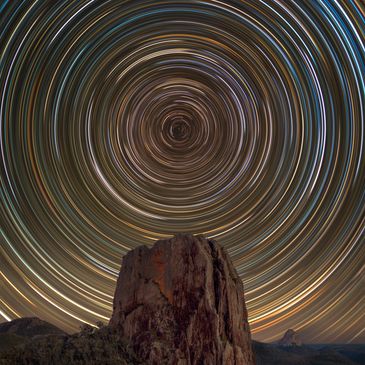
Coonabarabran is recognized as the Astronomy Capital of Australia, primarily because the mountains behind the town house Siding Spring, which features Australia’s largest optical telescope. This area is also part of Australia’s first International Dark Sky Hub, where a bortle one sky is frequently observed.
Why this sky
Astronomy Capital of Australia
Astronomy Capital of Australia
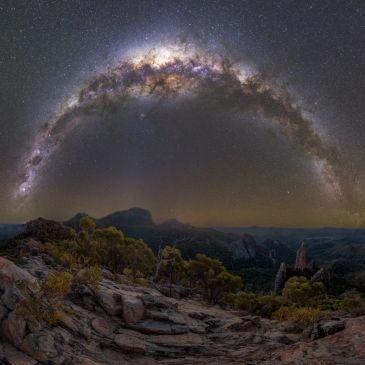
Warrumbungle National Park is recognized as the premier Dark Sky Hub in the Southern Hemisphere and ranks as the second-best in the world for dark-sky visitors. The area offers stunning views of the Milky Way, the Magellanic Clouds, and some of the finest star clusters visible in the southern sky. Until the 1970s, most of the world's large telescopes were located in the north, making this latitude an ideal point for skywatching, especially with the nearby Siding Spring Observatory enhancing the stargazing experience.
How the mountain was chosen
Astronomy Capital of Australia
How the mountain was chosen
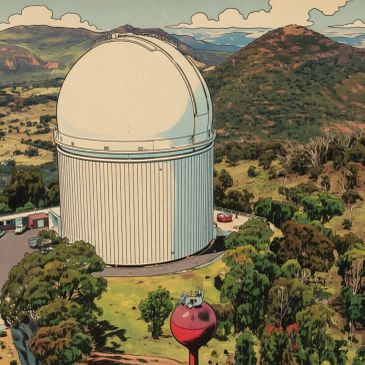
Mount Stromlo, situated above Canberra, was losing its treasured dark sky. In the early 1960s, Bart Bok, who was then the Director at Stromlo, sent teams to explore new locations for astronomical observations. The site chosen was Siding Spring Mountain, located on Gamilaraay Country west of Coonabarabran. ANU made the pivotal decision to select Siding Spring in 1962, and the first images from a new telescope on the mountain were captured in February 1964. This marked the beginning of the town’s vibrant astronomy life and its evolution into a prominent Dark Sky Hub.

The telescope
What it did & should still be doing
What it did & should still be doing
Britain and Australia agreed to build a 3.9-metre telescope together, which became part of the Dark Sky Hub at Siding Spring. The Anglo-Australian Telescope Agreement was signed in 1969, with the telescope achieving first light on 27 April 1974. Prince Charles officially opened it on 16 October 1974, and regular operations began in June 1975.
This telescope was one of the first large optical telescopes to be operated under full computer control. Since 2010, Australia has fully funded it after the United Kingdom stepped back from its involvement. To this day, it remains the largest optical telescope in the country.
What it did & should still be doing
What it did & should still be doing
What it did & should still be doing
The telescope was built to effectively survey the southern sky and study galaxies. The 2dF instrument and others mapped a vast number of galaxies, keeping a four-metre class telescope scientifically engaged long after larger mirrors were installed overseas. In the early 2000s, it ranked among the most productive telescopes of its size in the world. This legacy is not just that of a museum piece; the AAT continues to be a productive, working instrument providing students and scientists access to vital infrastructure larger telescopes around the world just can't due to demand.
The AAT enjoys one of the best remaining dark sites in the Southern Hemisphere.
What the town became
What it did & should still be doing
What the town became
The town supported the builders, scientists, and technicians who provided vital support infrastructure and jobs both in town and on the mountain. Thousands of visitors came to explore, prompting the town to create the World's Largest Solar System Drive, establishing itself as a Dark Sky Hub of wonder and inspiration. It proudly labeled itself the Astronomy Capital of Australia, with astronomy-themed shops lining the streets.
As the National Park nearby became Australia’s first International Dark Sky Park, both the telescope and the town, including Siding Spring, flourished together, enhancing the region's reputation for stargazing.
What must be protected
What Dark Sky Hub is doing
What Dark Sky Hub is doing
The huge mirror and the skilled people that operate it provide a unique opportunity within this latitude and longitude. As part of the Dark Sky Hub at Siding Spring, we aim to enhance public access to science, fostering inspiration and sparking curiosity. The collaboration between scientists and the town is elevating our efforts, matching a sky ranked number two in the world.
While we acknowledge that the AAT cannot compete with the latest giant telescopes overseas, we are committed to preventing an unmanaged wind-down that would leave the dome, Australia, and the town with nothing.
What Dark Sky Hub is doing
What Dark Sky Hub is doing
What Dark Sky Hub is doing
Dark Sky Hub at Siding Spring has two main objectives.
First, we aim to advocate for a managed future for the AAT.
Second, we strive to enhance the welcome and visitor experience in Coonabarabran and across the Shire.
To support these efforts, we have several tools in place, including the Sky Calendar app, the Solar System Drive guide, and the Tonight at a Glance app, along with a petition to help save the telescope.
Last Light
What Dark Sky Hub is doing
Last Light
In 2026, locals launched a public petition to save the AAT, advocating for its significance as a Dark Sky Hub near Siding Spring. Roadside banners can be seen on Timor/Tibuc Road, along with posters throughout the town. We have met with staff on the mountain to express our full support. Let’s keep the momentum going.